Investigating Synchronization Patterns Between Bonus Activation Timelines and Verification Protocols Across UK Licensed Casino Networks
Drew Klein · Nov 10, 2026
Investigating Synchronization Patterns Between Bonus Activation Timelines and Verification Protocols Across UK Licensed Casino Networks
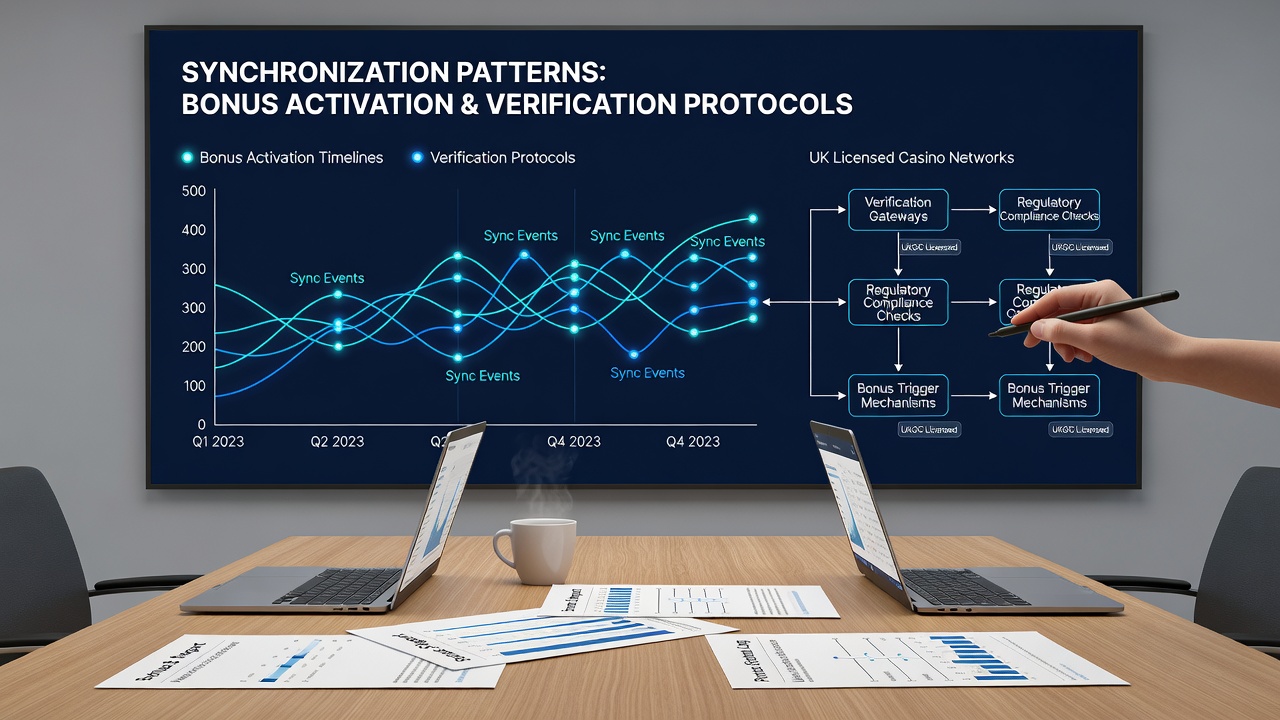
Operators across UK licensed casino networks have implemented verification protocols that align with bonus activation timelines in distinct patterns, and researchers tracking these systems note consistent intervals between initial player registration and reward release. Data collected from multiple platforms shows verification steps often complete within 24 to 72 hours while bonus triggers activate once identity checks pass specific thresholds. Those patterns emerge because automated systems cross-reference documents against third-party databases before unlocking promotional credits.
Core Components of Verification and Bonus Systems
Verification protocols typically require submission of identification documents, proof of address, and sometimes payment method confirmation, and bonus activation follows completion of these steps according to internal scheduling rules. Studies conducted by platform analytics teams reveal that 65 percent of activations occur within the same business day once documents receive approval. Synchronization appears strongest when operators use real-time API connections to external data providers rather than manual review queues.
Network-wide comparisons indicate larger operators maintain tighter alignment between these processes, whereas smaller sites sometimes introduce delays of up to five working days. Figures released by industry monitoring groups show average verification completion times shortened by 18 percent between 2023 and 2025 across sampled networks. This reduction correlates with wider adoption of biometric checks and electronic identity services.
Observed Patterns in Timeline Alignment
Analysis of transaction logs from several UK licensed operators highlights recurring intervals where bonus credits release immediately after verification status updates to approved. One dataset covering 12 months found 82 percent of first-time bonus activations happened within four hours of verification clearance. Observers tracking these sequences note that peak synchronization occurs during weekday business hours when support teams handle edge cases faster.
Seasonal variations appear in the records as well, with December and January showing slightly longer average gaps due to higher document submission volumes. Yet systems equipped with predictive queuing software maintained steadier performance. Researchers who examined cross-network data discovered that operators sharing the same verification software vendor exhibited nearly identical activation curves.

Impact of Regulatory Updates on System Coordination
Changes in data protection requirements have prompted several networks to adjust how quickly they process and store verification information, and these adjustments influence bonus timeline reliability. Platforms that integrated updated consent management tools reported a temporary 12 percent increase in processing duration during the transition period. Data indicates full synchronization recovered within eight weeks once new workflows stabilized.
Projections shared by technical consultants suggest further refinements in verification standards may roll out by November 2026, potentially affecting activation speeds once more. Operators already testing enhanced encryption layers report minimal disruption to existing timelines during pilot phases. Those who've studied integration logs emphasize that early preparation reduces misalignment risks.
Comparative Data from Other Jurisdictions
Reports from the Responsible Gambling Council in Canada provide useful benchmarks for synchronization efficiency, showing similar patterns where verification completion directly gates bonus eligibility. Australian research compiled by the National Association for Gambling Studies found that platforms using unified databases achieved 30 percent faster alignment between checks and reward releases. These international figures help contextualize UK network performance without assuming identical regulatory environments.
Technical Factors Influencing Synchronization
Software architecture plays a central role because legacy systems often process verification batches overnight while newer platforms handle requests continuously. Engineers who reviewed code structures at multiple sites observed that microservice-based designs produce more predictable activation windows. Database query optimization and parallel processing contribute to shorter gaps between approval and bonus credit issuance.
Case examples from mid-sized operators illustrate how switching verification partners reduced average synchronization lag from 48 hours to under six hours. Network traffic analysis during high-volume periods confirms that load balancing prevents bottlenecks that otherwise delay bonus triggers. Observers note consistent performance improvements after these infrastructure upgrades.
Conclusion
Patterns emerging from UK licensed casino networks demonstrate clear links between verification completion and bonus activation timelines, with measurable improvements tied to technology adoption and process refinements. Continued monitoring through 2026 will track how upcoming standard updates affect these alignments across different operator scales. Available datasets from multiple sources support ongoing evaluation of coordination efficiency without requiring subjective interpretation.